TOPSYS software

Expertise


Agency

Web7 min
Building an e-commerce website in Morocco: a guide to launching an online store that sells
Platform, card payments, cash on delivery, shipping, product pages, trust and SEO: the decisions that matter when launching an online store in Morocco.
To build an e-commerce website that sells in Morocco, you need five things: a platform suited to the size of your catalogue, payment methods customers actually use (bank cards through a local gateway such as CMI, but also cash on delivery), reliable logistics with clearly stated delivery times, complete product pages and trust signals that are visible from the first visit. SEO then amplifies the traffic. Here is each step, in the order we handle them with our clients.
Choosing the right platform
There are three main families of solutions: hosted turnkey platforms, open-source CMSs such as WooCommerce or PrestaShop, and custom development, often with a headless architecture. None is better in absolute terms. The right choice depends on the catalogue, the budget, the integrations required and how autonomous the team running the store day to day needs to be.
- Catalogue size and how complex the variants are (sizes, colours, volumes).
- Compatibility with the Moroccan payment gateway you choose.
- Support for French, Arabic and English, including right-to-left layouts.
- Speed on mobile, where most browsing happens.
- How easily the in-house team can add products and track orders.
- Recurring costs: subscription, paid extensions, hosting and maintenance.
A catalogue of thirty products doesn’t need the same infrastructure as several thousand products synced with stock. Starting from the real need avoids paying for useless features, or having to rebuild everything a year later.
Online payment in Morocco: bank cards and alternatives
To accept bank cards, the store must be connected to a payment gateway linked to a bank. CMI (Centre Monétique Interbancaire) is the most widespread solution in Morocco; other providers, the banks themselves and mobile payment solutions also have offers. Conditions (fees, activation time, required documents, international cards accepted) vary from one provider to another: ask for them in writing before locking in the platform.
Also check that the chosen platform has a module compatible with that gateway. Otherwise the integration will need to be developed, which changes the budget and the schedule. Finally, prepare your legal pages (terms of sale, returns policy, legal notice): they help customers and are often requested when payment is activated.
Cash on delivery is still essential
Many Moroccan shoppers still prefer to pay on receipt, especially for a first order from a brand they don’t know. Refusing cash on delivery often means losing those sales. It is better to offer it, then manage it to limit refused parcels.
- Confirm every order by phone or WhatsApp before shipping.
- Repeat the exact amount, delivery included, when confirming.
- Send parcel tracking so the customer expects the courier.
- Track the refusal rate by city and adjust zones or conditions if needed.
- Promote card payment with a simple incentive, without penalising cash on delivery.
Delivery: promise lead times you can keep
Choose a carrier that actually covers your target cities, then show delivery times and fees by zone on the product page and in the cart, not only at the last step. Fees discovered at checkout are a classic cause of abandonment. A simple returns policy, written in plain language, reassures more than a long legal page. And packaging is part of the experience: it is the first physical contact with the brand.
Product pages that answer before customers ask
In Morocco, many customers ask their questions on WhatsApp or Instagram before buying. A good product page answers the most common ones in advance and reduces those exchanges: price, availability, specifications, lead times, returns. Every question that keeps coming back in direct messages deserves a visible answer on the page.
- Real photos from several angles and, if possible, a short video.
- A clear title using the words customers search with.
- Structured specifications rather than a vague paragraph.
- Price, availability and delivery time visible without scrolling.
- A WhatsApp button for last questions, without pulling people away from the cart.
Trust signals for a first purchase
A new store has to prove it is serious. These elements, visible from the home page and in the footer, help a visitor move from curiosity to ordering.
- A phone number and a WhatsApp contact that actually answer.
- An address or showroom when there is one, plus the company’s legal details.
- Genuine customer reviews, including the less perfect ones.
- Logos of accepted payment methods and a site served over HTTPS.
- Active social accounts showing the products in real life.
SEO: prepare for traffic while you build
SEO is prepared before launch, not after. A clear structure (categories, then products), readable URLs, a title and meta description for each page, Product structured data with price and availability, careful mobile speed and language versions linked with hreflang give Google a store that is easy to understand. Category pages deserve genuinely useful text, and precise product attributes are also what AI engines reuse in their answers.
An online store doesn’t sell because it exists, but because it reassures.
Pre-launch checklist
- A full test order by card and by cash on delivery.
- Confirmation emails and messages proofread in every language.
- Delivery fees and lead times displayed before payment.
- Terms of sale, returns, privacy and contact pages published.
- Google Search Console and Google Analytics installed, sitemap submitted.
- Load time checked on a smartphone over 4G.
- Order confirmation process assigned to a named person.
Frequently asked questions
Should card payment be available from launch? It isn’t mandatory to get started, but it is recommended: it makes buying easier for part of your customers and reduces orders that are never honoured. Cash on delivery can sit alongside it.
Can you sell only through Instagram and WhatsApp? You can start that way, but a website gives you a stable address, a browsable catalogue, organic search traffic and sales data. Social networks then become acquisition channels rather than the store itself.
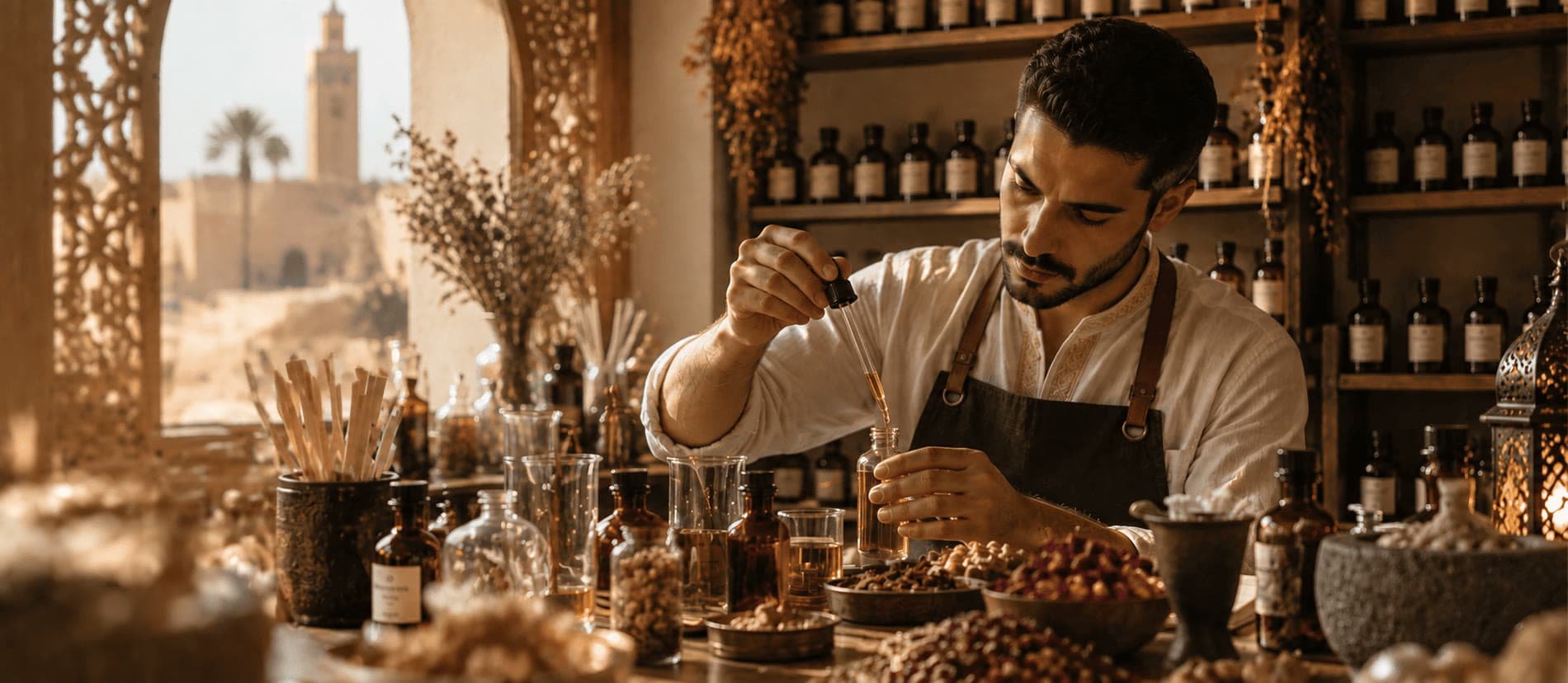
That is the approach we took for Parfumaroc: an editorial e-commerce experience that brings together brand image, content, organic search and paid acquisition. If you are preparing an online store, our Web & e-commerce practice can support you from choosing the platform through to SEO.


Got a project in mind?
Let’s talk about your brand, your website or your visibility.
Get in touch Explore our service: E-commerce